
Owning Your Feelings
When one person’s reality check is somebody else’s fear

I grew up in a family where bad things were constantly happening and people dealt with it by pretending that everything was fine . . . until it wasn’t. And then we fled for our lives.
I was the lone realist. I was often scared, but looking back, I’m grateful that I always dealt with whatever was happening, and many times in my life that tendency has saved me. I don’t waste a lot of time in hopeless situations.
Others don’t feel that way. Perhaps the reality is so scary that they shut down. They cannot hold the dual states of danger and ability to negotiate it.
As an adult, I twice took a series of women’s self-defense classes (aptly called "Prepare") and both times some student came up with a question as to whether taking self-defense somehow would attract violent situations. And both times the teacher answered with analogy:
“Do you have insurance?”
“Yes,” replied the student.
“Do you think having insurance causes your house to burn down or you to become sick?”
That put to bed the worry.
Lessons & Questions
I recently wrote in my piece Mirror, Mirror about realizing and committing to change my impulses that are unkind. This leads me to the kind of questions that Mark Helprin wrote about in his wonderful new novel Elegy in Blue.
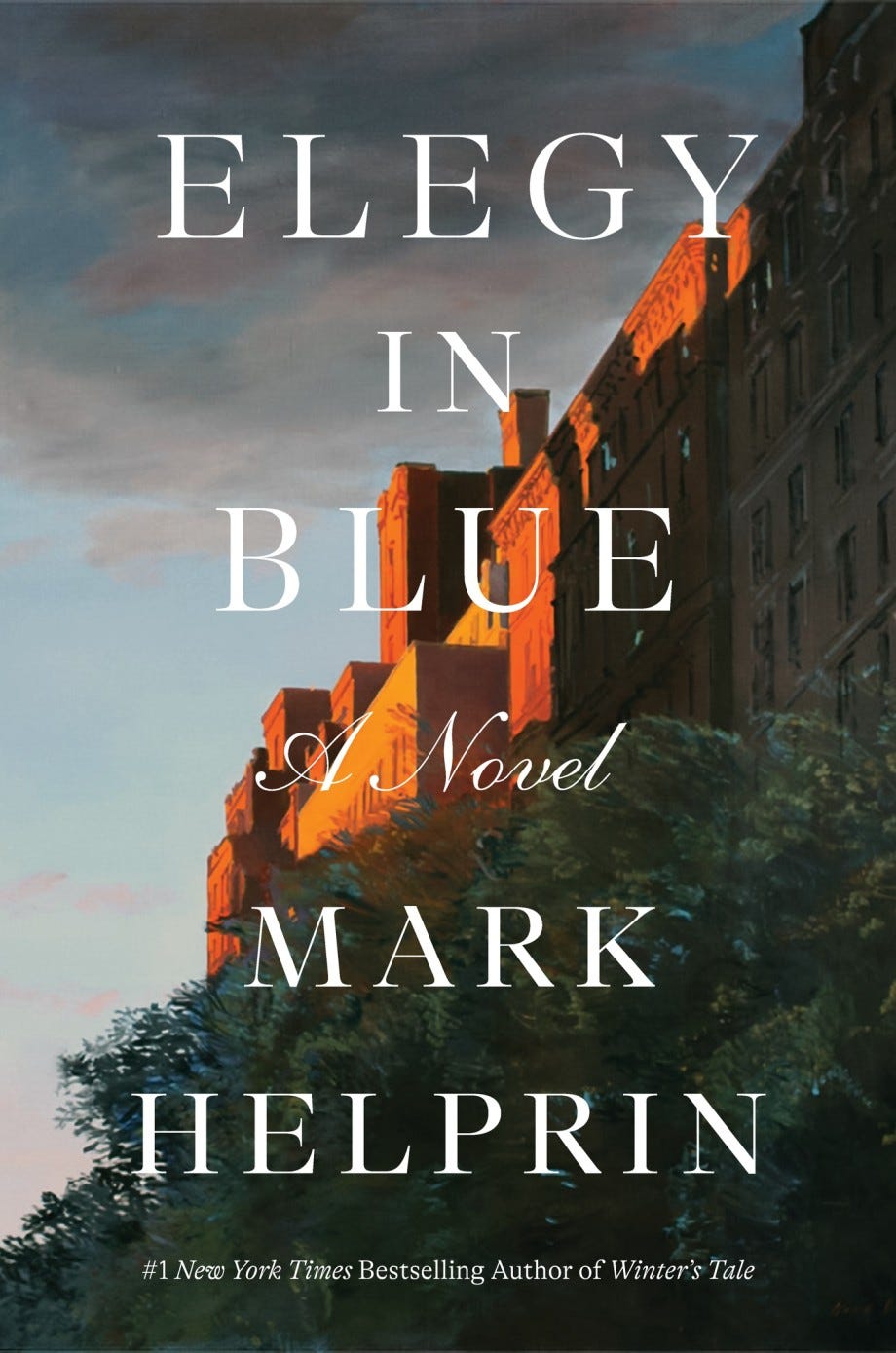
Elegy in Blue is the story of a man who killed someone who was about to kill many people, and then he is vilified for it. He had no right to take the law into his own hands, yet he made a split-second decision that ended in somebody’s death. Was this right or wrong? Is there a right or wrong? This story is a version of that famous “trolley problem,” psychological experiment where you are asked to choose, in an impossible situation where one or more people are about to die, whose death to cause with your actions. Or inaction.
So I ask: If there is a dangerous truth in front of us, and there is no way to predict how many people will use that truth to take protective actions and how many will freeze in fear, do you choose to illuminate that truth or stay quiet?
Is illuminating it unkind for those who will succumb to fear? Is that unkindness worth the risk that others may act or prepare for action in ways they might not have done without the knowledge?
When is the truth unkind?
When is it worth illuminating anyway?
I believe self-responsibility mandates owning your fear, and perhaps anger, if you have it, and owning responsibility for spreading what might be debilitating to some on the belief that it’s for the greater good . . . and owning consequences if you’re wrong.
As I said in my review of Elegy in Blue, this places you in a straddle over Occam’s Razor. It’s painful and cannot be reduced to an easy dictum.
Betsy Robinson is an editor, fiction writer, journalist, and playwright (also a former actor). She has written about books for Publishers Weekly, Lithub, Oh Reader, and many other publications. Her novels Cats on a Pole and The Spectators were published by Kano Press in 2024. She writes funny stories about flawed people and examines our herd culture. www.BetsyRobinson-writer.com.