
Mirror, Mirror
Sometimes the reflection is painful but fruitful.

“Stop! Stop! No more!” screamed my enflamed wrist tendons. It was 1998, and for the last hour I had been transcribing a tape recording of a deposition about a New York City Transit accident. I was mid what felt like a perpetual free fall, having quit a job that made my psyche hurt, and in my third year of scurrying from one part-time job to another—dog walker, gal Friday, and deposition transcriptionist—trying to figure out how to survive as a writer with money work that felt good. I’d grown used to the adrenaline shooting through my stomach, and except for the rebellion of my tendons, the numbness of mindless work was a relief.
The first hour of the transit case was the questioning of an articulate African man (his accent sounded Nigerian) about the specifics of his accident. I remember nothing he said except that his sister was also involved in the accident, and whenever she was mentioned, his voice filled with dread and foreboding as he referred to her very strong opinions and his inability to say anything for or about her; she would have to speak for herself.
Interesting. A little scary.
I finished him. Stretched out my wrists, screamed, held them under hot water, replaced the wrist supports, and, with tendons throbbing, forged onward into the next tape. Oh, to have a nonpainful way to make money and orchestrate life exactly the way I wanted it without having to deal with jerks and mean people.
Surprise! This new tape was the African man’s sister. Again, I cannot remember specifics, but I do remember that in answer to one of the first identifying questions, she declared that her birth date was February 7, 1951. The reason I remember is that this is my birth date, and because of that, I began to listen with particular eagerness and curiosity, on the edge of anxiety.
At the time, I didn’t know that this would be the last tape I’d ever transcribe, because I was about to move on to a new job that would actually lead to a happy career. But in retrospect, the fact that I was listening to this tape makes sense. I’ve always loved my birth date, and I wondered if this obviously smart African woman felt that way too and if she might convey a special message. Was that why I was sweating?
The woman seemed annoyed to be there. It was clear she had other places that required her presence—doing things that she actually wanted to do. Her tone was arrogant, dismissive, and absolutely certain of her rightness. She had multiple graduate degrees and a high-powered job where she was in charge of everything and everyone.
As the interview progressed, her annoyance with the transit authority examiner became palpable through my headphones. He was a nice, well-meaning guy. I knew this from listening to many hours of him questioning people. He was not terribly bright, but he was friendly. I liked him. And the more dismissive the African woman became, and the more exhausted and oppressed my friend the examiner became, the more I disliked her and wanted to protect him. So now I was really sweating.
Why did she have to be so superior and mean? Who did she think she was anyway? Couldn’t she see he was just trying to do his job? Why couldn’t somebody as bright as she see that she was accomplishing nothing but hurt?
Ding: February 7, 1951. Aquarius: intelligent, independent, original thinkers who can be detached, stubborn, judgmental, aloof, and extremist.
I’m interested in psychology, had had a ton of therapy, and had read plenty about the personality characteristics of my type according to every study from astrology, to enneagram, to Reichian characterology and Myers-Briggs categories. I was currently enrolled in a healing school for heaven sakes where the M.O. to uncover our hidden issues and true feelings was a presentation process which I found to be the equivalent of public psyche stoning. I’d seen plenty of people stiffen and glare when I expressed my opinions. But until this moment, I’d never seen what they were reacting to.
Even if she were brilliant and right about things, why did this African woman have to be so mean? So superior? So unkind?
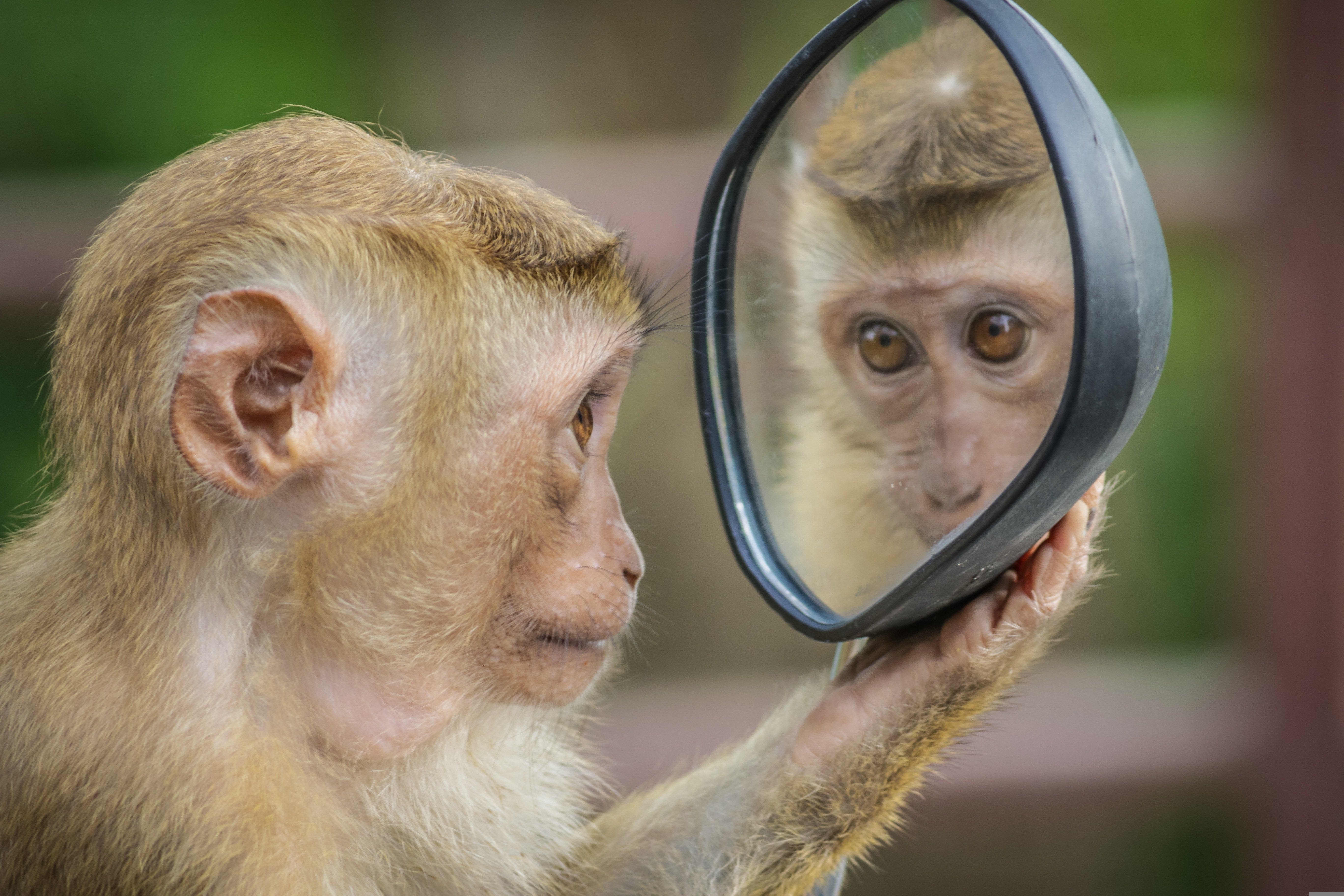
Ding: see my image in this mirror.
Ding: realize that none of this was haphazard; I was being given a great gift.
Ding: say “thank you” and use my intelligence to see how I, too, alienated and hurt people, and try to change.
It is very hard to turn your astute observational talents on yourself. But in that moment and into the new job that shortly followed, I did my best.
Many years later, I’m still doing my best, with new appreciation of that time of ignorance. Yes, I was often obliviously unkind, but I can see that I was also accruing experience that is only now coming to fruition. For more than 20 years I have been a journalist and novelist, drawing on what I learned in my age of oblivion, free-falling between money jobs, perplexed about how to make a living. I’ve spent a lot of that time listening to other people through my headphones—not only Transit Authority depositions, but Life magazine photographers, news correspondents at different media, business people playing dirty tricks on each other by secretly recording phone calls they swore they were not taping, and more. I have sold two articles that were birthed in that time: To the Hero on the J Train That Crashed on the Williamsburg Bridge 28 Years Ago (Compressed Journal of Creative Arts) and a piece about photographer and Renaissance man Gordon Parks (Next Avenue—reprinted on Substack). I’ve written novels about being lost and clueless and sometimes not even knowing how lost you are (Plan Z by Leslie Kove and The Last Will & Testament of Zelda McFigg), both of which won awards from their publishers. In July of 2024, I published my novel Cats on a Pole that grew out of the gruesome “psyche stoning” of healing school. I never could have produced this work during my years of ignorance. And the glacially slow process of mucking my way through made it all the more fertile.
Now, even though I probably fail more than I succeed in being always kind, my commitment is solid. Because of that African woman—that amazing ding—I will never again not know when I’m unkind, and the inner repercussions of that—a heart that screams louder than my tendons ever did—is motivation to try again. Once you have truly seen yourself in the mirror, once you’ve clearly identified the only real trouble and know that it is inside, there is no unknowing possible. And it is only when you’ve seen all of yourself, accepted both the positive and negative and committed to kindness, that you can even begin to love yourself.
Betsy Robinson is an editor, fiction writer, journalist, and playwright (also a former actor). She has written about books for Publishers Weekly, Lithub, Oh Reader, and many other publications. Her novels Cats on a Pole and The Spectators were published by Kano Press in 2024. She writes funny stories about flawed people and examines our herd culture. www.BetsyRobinson-writer.com.