
What and How We Remember
It’s malleable and editable.

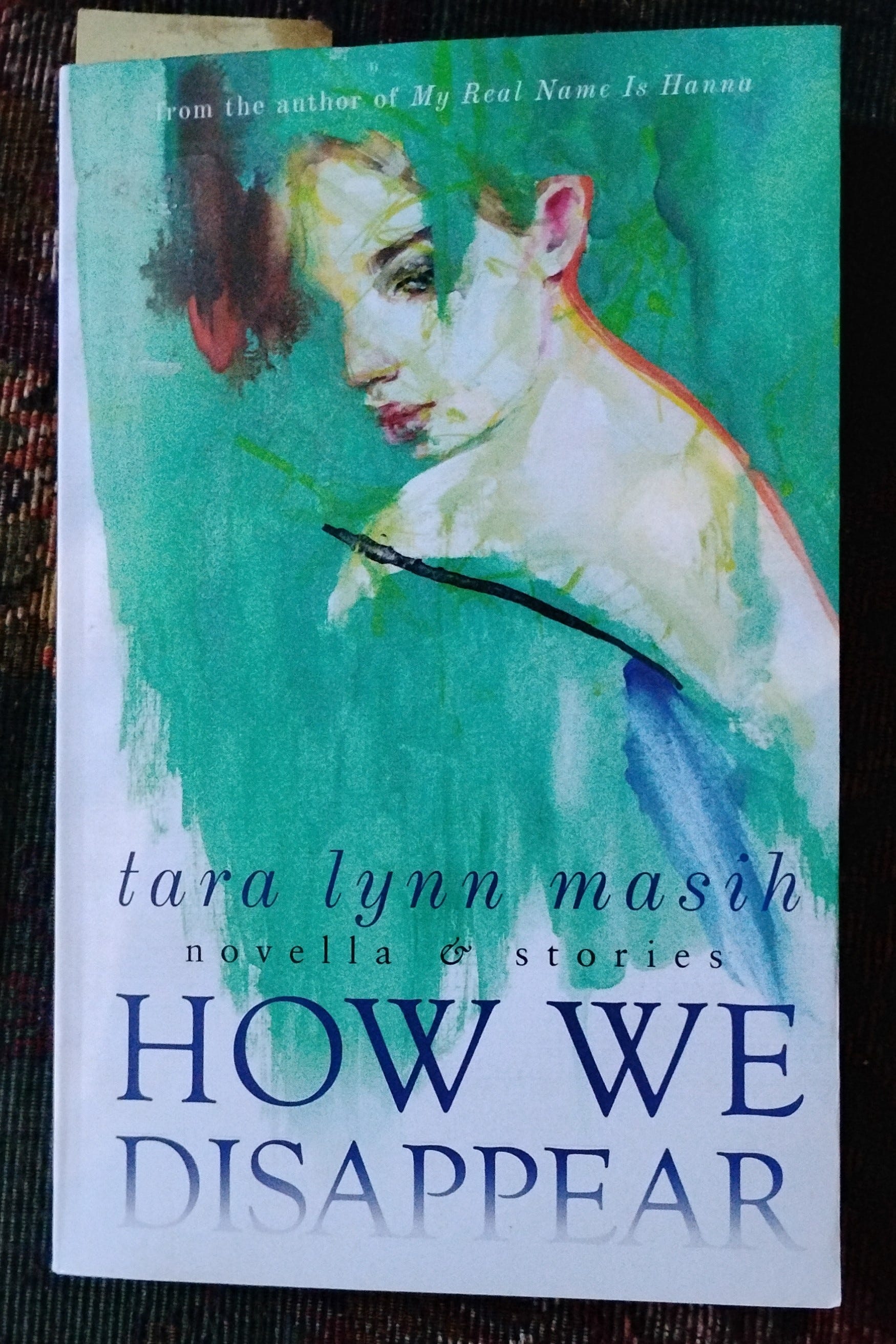
I’m reading an exquisite collection of short stories, How We Disappear by Tara Lynn Masih, and because I started, stopped, and restarted reading, I’ve read the first story twice—and it deserves multiple readings. “What You Can’t See in the Picture” is told by a woman who works for the police department as a top-secret “super recognizer.” She is able to recognize people in crowded video with such detail that she can pick them out of line-ups and remembers them forever. She sees characteristics that don’t change with aging: scars, bone structure, the shape of ears. [Spoiler:] A child goes missing, and she is able to find her. The child has prosopagnosia or face blindness. The woman and the child are opposites. And the final scene of the story made cry uncontrollably.
This story made me a recall a memory:
It was a bright, sunny day in New York City and I was walking up my brownstone-lined block on my way home from the park. Just as I approached my stoop, I spied a man halfway up the block, and it was as if I was struck by pure evil. I didn’t see his face. He was weaving as if he were on drugs. I froze in my tracks as three tiny children went running past me followed by their two leisurely strolling young mothers.
“Watch your kids, watch your kids,” I warned, too low for the kids to hear. “There’s a man who’s trouble up ahead,” I heard my mouth tell the mother closest to me.
“Black jacket?” she asked.
“Yes,” I croaked in full-body panic. “Please stop them!” I literally begged, my eyes tearing and fixed to the man’s back. If I’d been a dog, I would have charged the man barking, but I was human and these were not my children.
When I’ve remembered this scene, of course I’ve remembered that the kids were stopped and protected by their mothers, but the main thing that occupies me is my own terror. As everybody went on, my heart was pounding, my legs were shaking, and I collapsed onto my stoop until I could recover my breath.
I’ve thought of this scene many times since it happened. I’ve wondered what would have happened if the woman thought I was crazy and she hadn’t stopped the kids. But what I forget about in what I choose to remember is that she listened to me.
The whole story is that without hesitation, I spoke and the woman not only heeded my warning, but she yelled, “Stop!” with such urgency that the kids froze in their tracks. And as she marched up to the now-unhappy kids who’d expected to run to the corner, she grabbed their hands and, as she passed the man, she body-blocked them, thrusting her hip to move them away from the man. I briefly saw his face when he turned toward them, leering—an expression of pure evil.
Full story: The woman, her friend, and the kids passed the man without incident.
Full story: She listened. She reacted with as much urgency and energy as I was sending her, and she protected her children. She was a person who could hear me, and somehow our pairing was directed to protect her kids.
This is a success story. A happy ending. And yet what I always go back to is my fear, horror, and desperation.
Why do I do that?
The charge of high drama? It’s familiar? Or maybe it’s how I disappear—by deleting or editing the full story.
Why not remember the whole picture?
I warned, I was heard, I was part of a team of protectors and the children were okay and moved on. Full stop.
Betsy Robinson is an editor, fiction writer, journalist, and playwright (also a former actor). She has written about books for Publishers Weekly, Lithub, Oh Reader, and many other publications. Her novels Cats on a Pole and The Spectators were published by Kano Press in 2024. She writes funny stories about flawed people and examines our herd culture. www.BetsyRobinson-writer.com.
How fortunate you were there and she listened to you.