
Sacred Ferocity
Can there be such a thing?

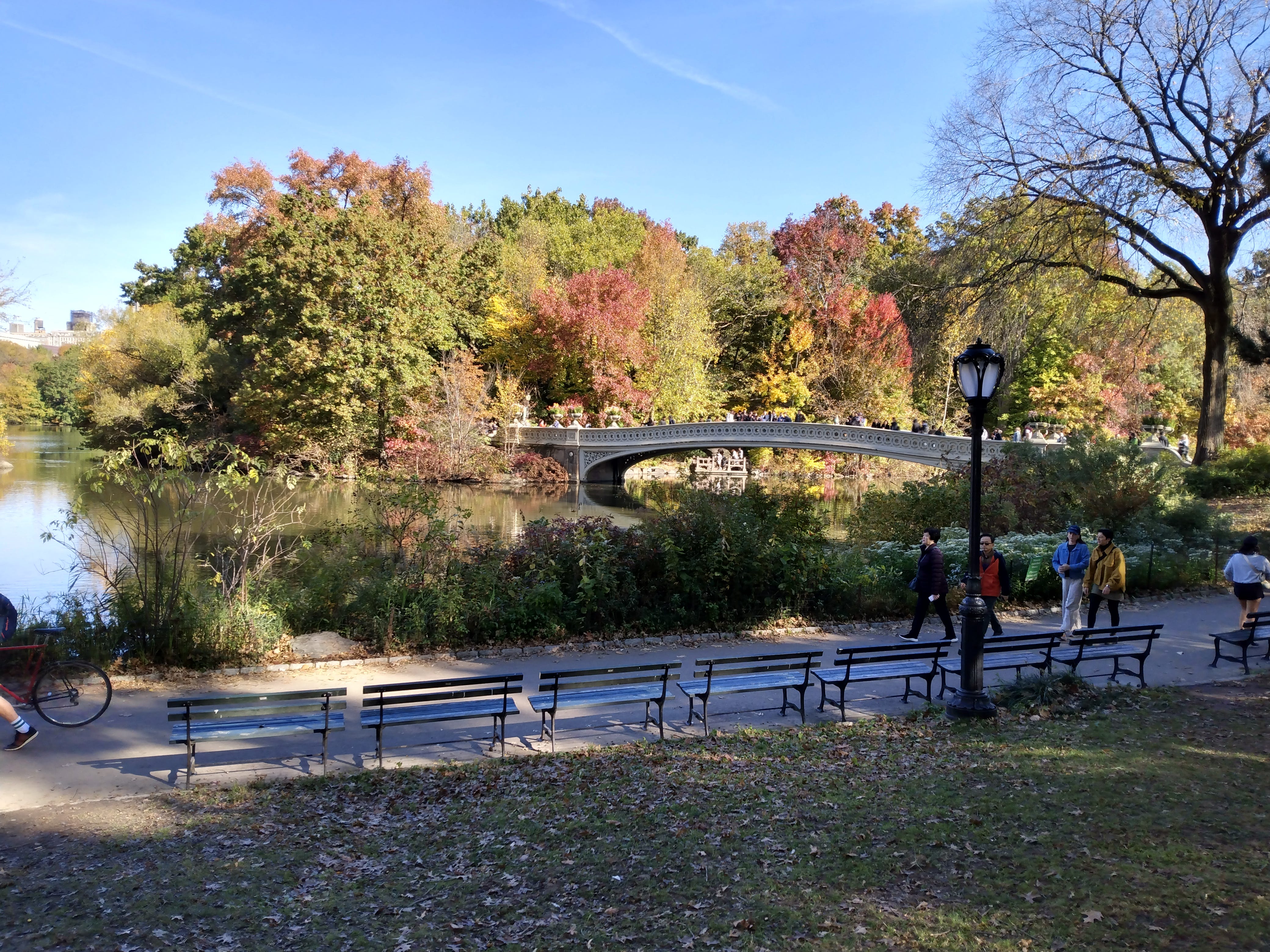
I was taking a contemplative, solo walk through New York City’s woodlands, an area called The Ramble. I’d serpentined on the paths to prolong it and was finally nearing the exit out Bow Bridge which connects the area with “mainland” park. As I approached the bridge from the eastern path, I saw a man approaching from due north. He looked familiar but lots of people in NYC look familiar, so I merely glanced and stepped onto the bridge. Seconds later this man surged past me in a kind of wild-man walk, his legs bowed out, his body sprawling through the air—as did his wake of energy, and that’s when I recognized him. He was a man I’d gone on a date with more than 20 years ago. We’d had everything in common, seemed to be having a great time when I casually mentioned my age, and he slammed shut. Confused, I accepted this, and shortly after, we split from each other on the street. I later learned from the woman who’d set me up that he was looking for a wife who he could have kids with—somebody much younger than he and I (we were around the same age, but I looked a lot younger). I never thought much about this again. Until he whacked me with his energy surging past me on the bridge.
As he turned the corner on the other side of the bridge, I caught a glimpse of his face; he looked supremely content. His energy was fiercely happy.
Wow, I thought, I wonder why we crossed paths. It didn’t seem random. It seemed like there was some shove of a message . . . and after days of it arising in meditation, here’s what I think.
Ferocity can be happy, sacred, and necessary.
Ferocity is necessary for a certain kind of movement and shifting. And when it’s consciously used this way, it feels happy and productive.
I have no idea what was going on in that man’s mind, but I know he energetically shoved me, so I suspect that he recognized me before I realized who he was. And he was so happy! I know from the community we were both in that he eventually married a woman and had the kids he wanted. So maybe his rejecting me was a turning point for him that felt good. I have no idea.
But his shove, for me, was a gift. To see it in combination with such happiness was a reminder: we cannot achieve the changes we want without a certain kind of ferocity.
Our Reified Inequity
This morning Robert Reich wrote a column called Musk and Mamdani: The End of Harsh Capitalism? He writes:
No other advanced capitalist nation subjects its working families to as much fear and uncertainty over jobs, wages, health, and retirement as does America. None tolerates nearly the same inequalities of income and wealth (although some are moving in our direction). Musk’s pay and Mamdani’s victory are exhibits A and B.
Harsh American capitalism has become unsustainable, politically and economically.
Unsustainable politically
The bottom 80 percent, whose paychecks haven’t kept up with inflation, have grown increasingly angry. That anger has infused both political parties with fierce antiestablishment populism and fostered deep distrust in all political institutions.
I’m a Jewish New Yorker who voted for Mamdani, despite his past anti-Semitic rhetoric. I truly believe his language came from anger and frustration (which I share) at Netanyahu’s brutal and unequal policies toward Israeli Palestinians who do not have the same rights as Jews and in the war in Gaza. Prior to facing the whole city, I believe Mamdani was ignorant about what his rhetoric conveyed to Jews. And I believe that he now understands the effect of such language and that it is not necessary—he can condemn Netanyahu, an international war criminal, according to the International Criminal Court—without being anti-Semitic. I believe the reason he would only state that the language he previously used does not reflect his feelings about Jews was that, as a savvy politician, he knew that to “disavow the language” would alienate anti-Semitic supporters whose votes he needed.
Time will tell if my confidence is well-placed. Right now I feel great about my vote and the victory. Because nothing less than his ferocity and his using it as a servant-leader—somebody who is working for the people, not himself, not because of a lust for power—will, as Reich illustrates, overcome the imbalance we have embedded into every level of government and society.
The history of this imbalance goes back to the slave era, continued with the Gilded Age, was toppled with the New Deal, was restored by Reagan, and has steadily climbed since then. (Read the end of Reich’s article.) Nothing short of ferocity is going to power the shift we need to make. Ferocity plus Love. I do not think the two are mutually exclusive. (See more on this in tomorrow’s Substack column.)
Being loving does not mean being weak. On the contrary. You can burn with ferocious Love for democracy and equality and justice for all, simultaneously respecting people and maybe shoving them every now and then when they are crossing a critical bridge, but not hurting them because you are not a killer or addicted to your own power.
Betsy Robinson is an editor, fiction writer, journalist, and playwright. She has written about books for Publishers Weekly, Lithub, Oh Reader, and many other publications. Her novels Cats on a Pole and The Spectators were published by Kano Press in 2024. She writes funny stories about flawed people and examines our herd culture. www.BetsyRobinson-writer.com.
What a "coincidence" literally running into that guy and what it evoked.